

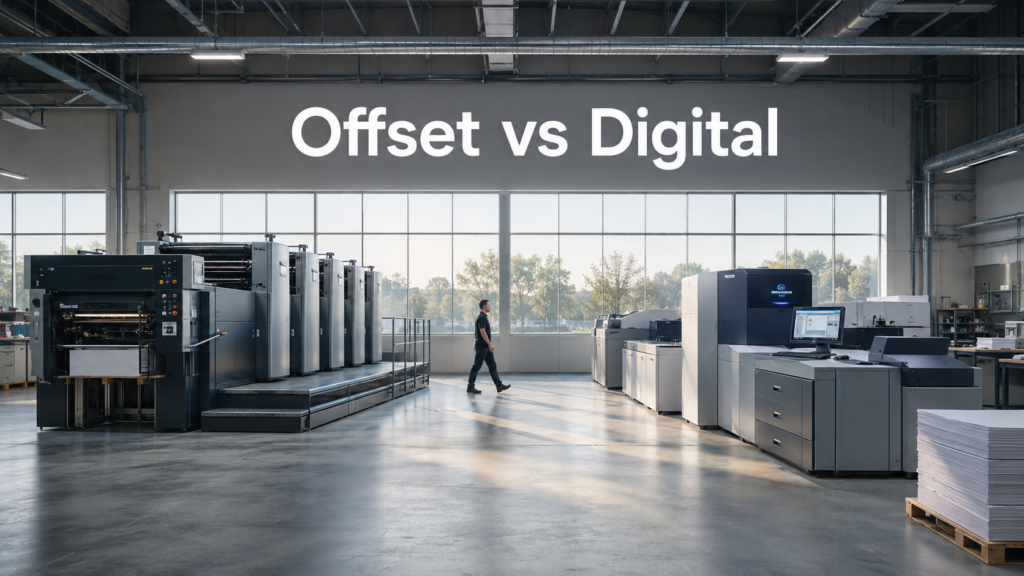
The difference between offset and digital printing comes down to how the image gets onto the page and how many copies you need. Offset printing transfers ink from etched metal plates onto a rubber blanket and then onto paper, which makes it the most economical choice for large quantities. Digital printing sends your file straight to the press with no plates at all, making it faster and more affordable for shorter runs. Understanding which method fits your project saves you money, time, and a few headaches at deadline.
At Replica Printing Services, we have run both offset and digital presses for businesses across San Diego and Poway since 2001, so we help clients make this exact decision almost every day. This offset vs digital printing comparison breaks down how each process works, what each one costs, and how to choose the right one for your next batch of brochures, booklets, postcards, or training manuals.
Neither method is universally “better.” The right answer depends on your quantity, your budget, your timeline, and how precise your color needs to be. Here is everything that actually matters.
Offset and Digital Printing Differ Most in How the Image Reaches the Page
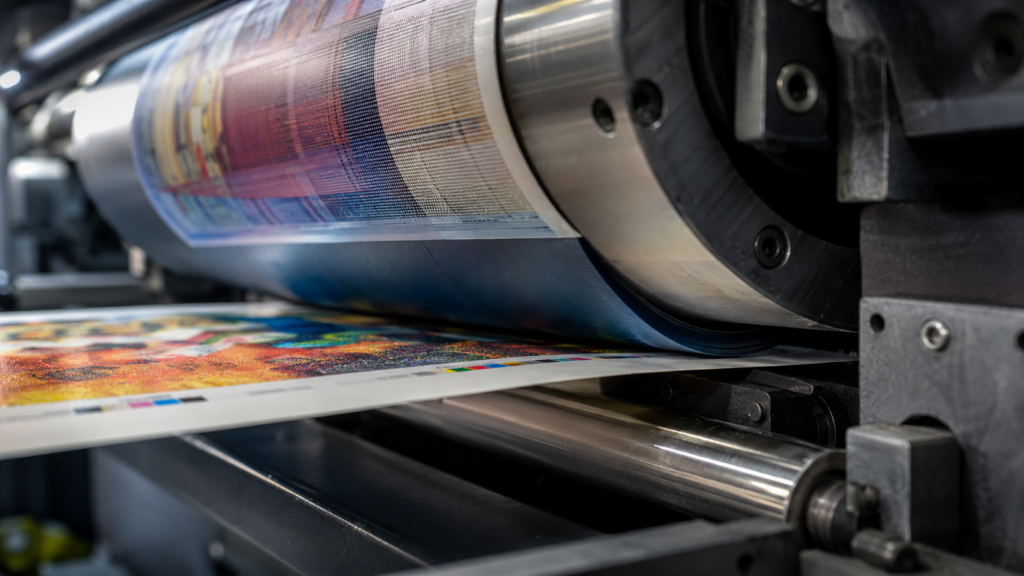
The core difference between the two methods is mechanical: offset uses physical plates, while digital uses none. That single distinction drives nearly every other trade-off in cost, speed, and quality.
How Offset Printing Works
Offset printing burns your artwork onto a separate aluminum plate for each color. Each plate transfers ink onto a rubber blanket, and the blanket then “offsets” the image onto the paper — which is where the name comes from. Because the ink never touches the plate-to-paper surface directly, the result is exceptionally crisp and consistent across thousands of sheets. The catch is that creating those plates takes setup time and upfront cost, so offset only becomes economical once you are printing in volume.
How Digital Printing Works
Digital printing skips plates entirely. Your file goes straight from the computer to a high-resolution press that applies toner or liquid ink directly onto the paper. There is almost no setup, which means a digital job can be ready in hours rather than days. Digital also makes it possible to change the content on every single sheet — a feature offset simply cannot match.
The Cost Difference Comes Down to Print Volume
Offset printing is cheaper per piece at high volumes, while digital printing is cheaper overall for short runs. This is the single most important factor for most businesses choosing between the two.
With offset, you pay a significant upfront cost to produce the plates and set up the press. Once that is covered, each additional sheet costs very little, so the price per piece keeps dropping the more you print. Digital has almost no setup cost, but the per-piece price stays roughly flat no matter how many you order. That creates a clear break-even point:
- Short runs (roughly under 500 pieces): Digital almost always wins on total cost because there are no plate or setup fees to absorb.
- Large runs (often 1,000+ pieces): Offset pulls ahead as the low per-piece cost spreads the setup expense across many copies.
- The gray zone (around 500–1,000 pieces): The best value depends on paper, color count, and finishing — this is where it pays to ask a printer to quote both ways.
Here is a side-by-side look at how the two methods compare across the factors that matter most:
| Factor | Offset Printing | Digital Printing |
|---|---|---|
| Best for quantity | Large runs (1,000+) | Short runs (1–500) |
| Setup cost | Higher (plates required) | Minimal to none |
| Cost per piece at volume | Drops as quantity rises | Stays roughly flat |
| Turnaround speed | Slower setup | Fast — often same or next day |
| Color matching | Excellent (Pantone/spot colors) | Very good (CMYK), improving steadily |
| Personalization (variable data) | Not available | Yes — unique data per piece |
| Paper & specialty stocks | Widest range | Growing, but more limited |
Offset Printing Delivers the Edge on Color Accuracy and Specialty Stocks
Offset printing remains the gold standard when exact color matching and premium materials matter. Because offset uses custom-mixed inks, it can reproduce specific Pantone (PMS) spot colors precisely — essential for brand logos and corporate identity pieces where a color has to be the same on every print, every time.
Offset also handles the broadest range of paper weights, textures, and specialty stocks, along with finishing options like metallic or specialty inks. If your project is a large run of high-end marketing collateral, an annual report, or a branded piece with a strict color standard, offset is usually the stronger choice. The trade-off is the longer setup and the higher cost on small quantities.
Digital Printing Wins on Speed, Short Runs, and Personalization
Digital printing is the clear winner whenever you need fast turnaround, low quantities, or customized content. With no plates to produce, digital jobs move quickly — a real advantage when a deadline is tight, something our clients in the training and education space rely on constantly.
Digital’s standout strength is variable data printing, which lets each printed piece carry different information. That makes it ideal for:
- Personalized direct mail — addressing each postcard or letter to a specific recipient by name.
- Numbered items — tickets, certificates, and forms that need sequential numbering.
- On-demand reprints — printing only what you need now and reordering later without paying setup again.
- Quick proofs and test runs — checking a design in print before committing to a larger order.
For most small businesses ordering business cards, flyers, or a few hundred booklets, digital delivers the best mix of quality, speed, and price.
Which Printing Method Is Right for Your Project?
Choose offset for large, color-critical runs and digital for fast, short, or personalized jobs. To decide quickly, run your project through these questions:
- How many do you need? Under 500 leans digital; over 1,000 leans offset.
- How fast do you need it? If the deadline is days away, digital’s quick turnaround is your friend.
- How precise does the color have to be? If you must hit an exact brand Pantone color, offset is safer.
- Does each piece need different information? If yes, digital is the only option that supports variable data.
- Are you using a specialty paper or finish? Offset offers the widest selection of stocks and effects.
Still unsure? That is exactly why we offer free printed proofs and quote projects both ways — so you can see the quality and the price before you commit.
Frequently Asked Questions About Offset vs Digital Printing
Is digital printing as good quality as offset?
For most everyday business printing, modern digital quality is excellent and difficult to distinguish from offset. Offset still holds an edge for exact Pantone color matching and very large runs where consistency across thousands of sheets is critical. For short runs of flyers, booklets, and marketing materials, digital typically delivers more than enough quality.
At what quantity does offset printing become cheaper than digital?
The break-even point usually falls somewhere between 500 and 1,000 pieces, though it varies with paper, color count, and finishing. Below that range, digital is almost always more economical because there are no plate or setup fees. The most reliable way to know is to have your printer quote the job both ways.
Can digital printing match Pantone (PMS) spot colors?
Digital presses reproduce Pantone colors using a CMYK build, which gets very close but is not a true spot-color match. For brand work where a logo color must be exact, offset with custom-mixed spot inks is the more dependable choice. For general marketing pieces, digital color is usually more than acceptable.
Which printing method is faster?
Digital printing is faster for most jobs because it requires no plate creation or press setup, so projects can often be completed the same or next day. Offset takes longer to set up, but it runs efficiently once underway, which is why it remains the choice for very high volumes despite the slower start.
Which is better for short-run printing?
Digital printing is better for short runs. It avoids the upfront plate and setup costs that make small offset jobs expensive, and it allows on-demand reprints so you only produce what you need. This makes digital ideal for businesses that want flexibility without ordering thousands of copies at once.
The Bottom Line: Match the Method to the Job
There is no single best printing method — only the best method for your specific project. Offset printing rewards high volumes with low per-piece cost and unbeatable color precision, while digital printing rewards speed, flexibility, and short runs with personalization. The smartest move is to weigh your quantity, timeline, color needs, and budget before you order.
If you would like a straight answer for your particular project, the team at Replica Printing Services is happy to review your files, recommend the right press, and provide a free proof — so San Diego and Poway businesses get printing that looks great and arrives on time. Whatever you are printing next, choosing the right method is the first step to getting it right.