

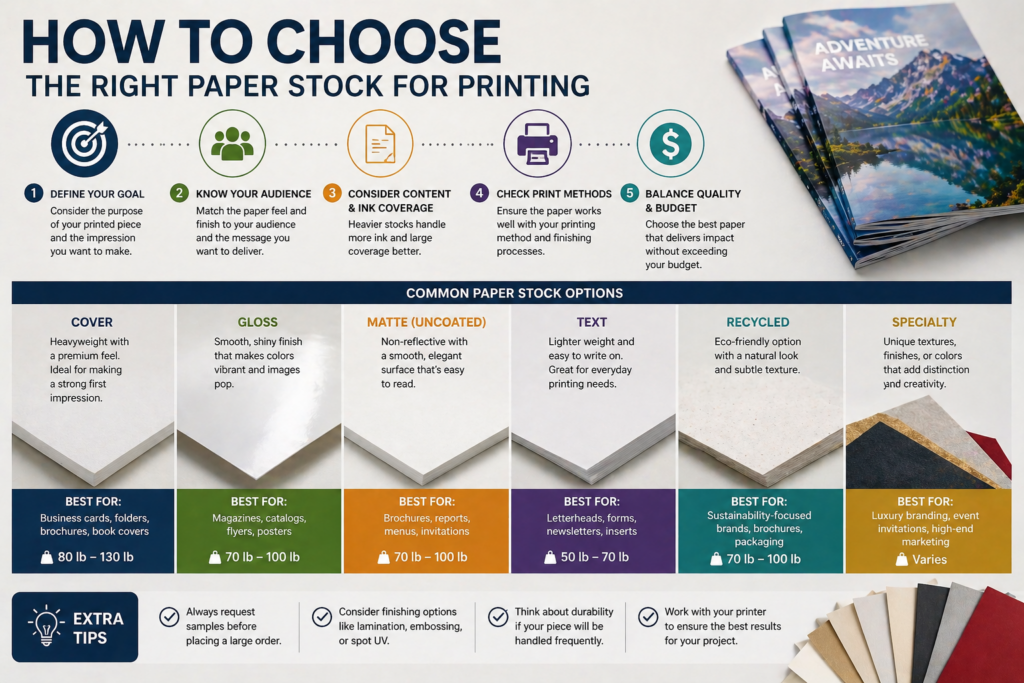
Paper is the foundation of every printed piece — yet it is one of the most overlooked decisions in the entire production process. Whether you are producing sales brochures, employee training workbooks, direct mail postcards, or presentation folders, the paper stock you choose directly shapes how your audience perceives your brand. At Replica Printing, we have spent nearly two decades helping San Diego businesses get this decision right. It all starts with understanding how to choose the right paper stock for printing before your job ever goes to press.
The good news: once you understand the three key variables — weight, finish, and purpose — the right choice becomes much more straightforward. This guide walks you through everything you need to confidently match paper to your next project, from everyday flyers to high-end marketing collateral.
Paper Stock Has a Greater Impact on Print Quality Than Most People Expect
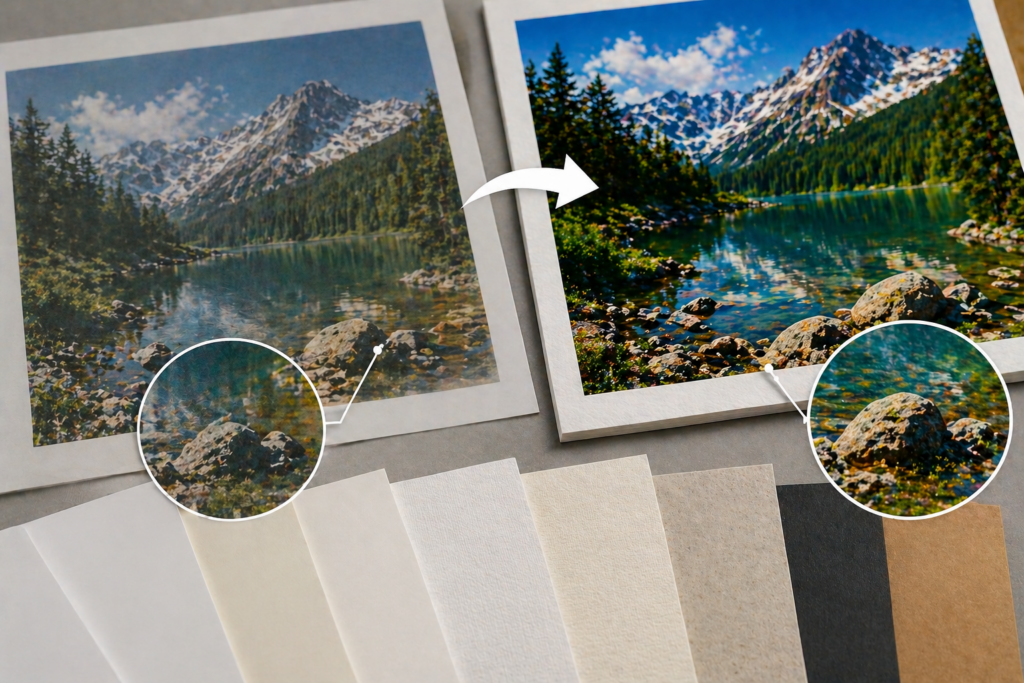
A beautifully designed brochure printed on the wrong paper can feel cheap, flimsy, or off-brand — even if the artwork itself is excellent. Paper stock influences color vibrancy, ink absorption, texture, durability, and the tactile experience your audience has the moment they hold your piece. Premium paper signals professionalism and attention to detail, while a poor stock choice can quietly undermine even the most polished design.
At Replica Printing, we ask every client three questions before recommending a stock: What is this piece for? Who will receive it? And how long does it need to last? Those three answers narrow down the right paper faster than any spec sheet.
Paper Weight Determines the Feel, Durability, and Purpose of Your Printed Piece
Paper weight is the most commonly misunderstood specification in printing. In the United States, weight is measured in pounds (lb) based on a basis weight system — meaning the weight of 500 sheets cut to a standard size for that paper category. Internationally, you will see GSM (grams per square meter), which is a consistent measure regardless of paper type. A higher number in either system means a heavier, thicker sheet.
Here is a practical reference for the most common paper weights and their typical applications:
- 60–70 lb text (90–104 GSM): Lightweight and economical. Best for internal documents, handouts, and everyday office printing.
- 80 lb text (118 GSM): The most popular weight for flyers, newsletters, and sales sheets. Good color reproduction with a confident, professional feel.
- 100 lb text (148 GSM): Premium weight for brochures, catalogs, and high-end marketing collateral. Noticeably heavier and more substantial in hand.
- 65 lb cover (175 GSM): Lightweight card stock. Common for folders, light postcards, and basic covers.
- 80 lb cover (216 GSM): The standard weight for business cards and postcards. Sturdy and professional.
- 100 lb cover (270 GSM): Heavy card stock for premium business cards, hang tags, and thick presentation covers.
- 14 pt / 16 pt card stock: Measured in points (thickness rather than weight), this is the industry standard for business cards and presentation folders. Sixteen-point stock has a substantial, high-end feel.
One common mistake: assuming “text” and “cover” weights are on the same scale. They are not. An 80 lb cover stock is significantly heavier than 80 lb text stock, even though the numbers appear identical. Your print provider can clarify the difference and show you physical samples.
Coated vs. Uncoated Paper: How Finish Changes Color, Readability, and Feel
After weight, finish is the most important paper variable — and the choice between coated and uncoated paper fundamentally changes how ink behaves on the page, how colors appear to the eye, and how comfortable the piece is to read or annotate.
Coated paper has a surface treatment that restricts ink absorption, producing sharper image edges, more vibrant color, and a cleaner, crisper look. It is the go-to choice for anything image-heavy or brand-forward. Uncoated paper lets ink absorb deeper into the fibers, creating a softer, warmer appearance with slightly less color saturation — but with a natural texture that is far easier to write on.
Here is how the most common finishes compare:
- Gloss coated: High shine with vivid, punchy color reproduction. Excellent for photography and full-color marketing materials. Can produce glare under direct lighting.
- Matte coated: Smooth, non-reflective surface. Colors appear rich and deep without any shine. Easier to read in bright environments. Popular for brochures, annual reports, and book covers.
- Silk / satin coated: A refined middle ground between gloss and matte — smooth with a subtle sheen. Very popular for high-end marketing collateral and premium brochures.
- Uncoated: Natural, tactile feel. Best for readability, writability, and pieces that need a human touch. Standard for stationery, training manuals, workbooks, forms, and notepads.
Matching Paper Stock to Your Specific Print Project
The most efficient way to choose the right paper is to start with your project type and work backward from there. Below is a practical matching guide based on the most common print jobs Replica Printing produces for San Diego clients:
- Business cards: 14 pt or 16 pt card stock with gloss or matte coating. Thick, durable, and professional.
- Brochures and sales sheets: 80–100 lb gloss or silk text. Vibrant color reproduction, lightweight enough to fold cleanly.
- Training manuals and workbooks: 60–80 lb uncoated text. Practical, cost-effective, and easy for participants to write in during sessions.
- Posters and large-format prints: 80–100 lb gloss or matte text. Holds color saturation at large sizes without appearing washed out.
- Direct mail postcards: 80–100 lb gloss cover. Durable enough to survive USPS handling, with a coated surface that makes photography and color pop.
- Presentation folders: 80–100 lb cover, matte or uncoated. Sturdy and polished without feeling overbuilt.
- Booklets and catalogs: 80 lb gloss text interior with an 80–100 lb gloss cover. The industry standard combination for good reason.
- Forms and notepads: 60 lb uncoated bond. Light, economical, and easy to write on repeatedly.
How Paper Choice Communicates Your Brand Before a Word Is Read
Paper is a silent communicator. The physical feel of a printed piece creates a subconscious impression the moment someone picks it up — before they read a single headline. A luxury real estate firm that prints on thick, soft-touch matte stock sends an entirely different brand signal than one using standard glossy paper, even if the designs are identical. This is why leading brands invest as much strategic thought into paper selection as they do into typography, color, and layout.
Heavier stocks convey quality, permanence, and investment. Lighter stocks signal efficiency and accessibility. Coated paper reads as modern and polished; uncoated reads as approachable and genuine. There is no universally correct answer — the right paper is the one that reinforces what your brand is trying to say.
At Replica Printing, we offer free printed proofs on request, so you can see and feel your paper choice before committing to a full production run. Our team is happy to pull samples and walk you through options based on your project, your brand, and your budget.
Frequently Asked Questions About Choosing Paper Stock for Printing
What is paper weight and why does it matter for printing?
Paper weight — measured in pounds (lb) or grams per square meter (GSM) — indicates how thick and heavy a sheet is. Heavier paper feels more premium and is more durable, while lighter stock is economical and better suited to high-volume print runs. The right weight depends on your project’s purpose, your audience, and your overall budget.
What is the difference between coated and uncoated paper?
Coated paper has a surface finish — gloss, matte, or silk — that restricts ink absorption and produces sharper images with more vivid color. Uncoated paper absorbs ink into its fibers, creating a softer, natural look that is far easier to write on. Coated is the standard for marketing materials; uncoated is preferred for workbooks, forms, and everyday correspondence.
What paper stock is best for business cards?
14 pt or 16 pt card stock is the professional standard. Gloss coating delivers a vivid, polished look; matte or soft-touch coating creates a more refined, premium impression. Avoid lightweight text stock for business cards — it feels insubstantial and does not hold up to everyday handling.
What paper should I use for training manuals or workbooks?
60–80 lb uncoated text is the most practical choice for training and educational materials. It is easy to write on, cost-effective for large print runs, and durable enough to hold up through repeated use. Replica Printing specializes in customized training material production for San Diego businesses, nonprofits, and educational organizations.
Can I see or feel a paper sample before placing my full print order?
Yes. Replica Printing provides free printed proofs so you can evaluate the paper, color output, and overall quality before committing to your full run. This step is especially valuable for large orders or projects where the paper choice has a significant impact on the finished product.
What does GSM mean in paper weight?
GSM stands for grams per square meter — an internationally standardized measure of paper weight. Unlike the U.S. pound system, which varies depending on paper category, GSM is always consistent: a higher number always means a heavier, thicker sheet. Most professional print suppliers, including Replica Printing, can advise in either unit.
Work with Replica Printing to Get Your Paper Selection Right
Choosing the right paper stock does not have to be a guessing game. At Replica Printing in Poway, CA, our team works closely with clients throughout the greater San Diego area to recommend the best paper for every job — whether you need a quick-turn sales sheet, a premium brochure run, or a large batch of training workbooks. We combine nearly two decades of hands-on printing expertise with top-of-the-line digital printing technology to deliver results that look exceptional and hold up in the real world.
Ready to start your next project with confidence? Contact Replica Printing at (858) 549-5380 or request a quote online. The right paper is out there — we will help you find it.